

APS craft grows through learning friction. Use AI to remove admin burdens, not developmental struggle, so expertise and judgement endure.
Policy
This content aligns with the Strategy, Policy & Evaluation craft
Contents
Delivering great policy advice to government is at the heart of what we do as a public service. It’s the best advice that we can provide to decision makers to enable them to deliver better outcomes for all Australians.
Latest news

Published
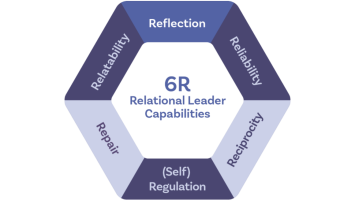
Join 6R Relational Leadership Skills Labs - in-person APS workshops to build trust, psychological safety and lead resilient teams with confidence.

Published
Explore AI learning options designed to help APS employees build practical skills and confidence, from foundational knowledge to leadership.
Upcoming events

Date
Location
Australia wide (Virtual)
This course is delivered from 04/11/2026 to 13/11/2026, by face-to-screen consisting of four 4-hour sessions.

Date
Location
Australia wide (Virtual)
This course is delivered from 23/11/2026 to 24/11/2026, by face-to-screen consisting of one 6.5-hour session and one 2.5 session.

Date
Location
Australia wide (Virtual)
This course is delivered on 02/12/2026, by face-to-screen consisting of one 8-hour session.

Date
Location
Australian Capital Territory
This course is delivered on 28/10/2026, by face-to-face consisting of one 8-hour session.
Date
Location
Australia wide (Virtual)
This course is delivered on 16/02/2027, by face-to-screen consisting of one 8-hour session.
Date
Location
Australian Capital Territory
This course is delivered on 02/03/2027, by face-to-face consisting of one 8-hour session.
Date
Location
Australia wide (Virtual)
This course is delivered from 15/03/2027 to 24/03/2027, by face-to-screen consisting of four 4-hour sessions.
Date
Location
Australian Capital Territory
This course is delivered on 16/03/2027, by face-to-face consisting of one 8-hour session.
Date
Location
Australia wide (Virtual)
This course is delivered from 28/04/2027 to 29/04/2027, by face-to-screen consisting of one 6.5-hour session and one 2.5 session.
Date
Location
Australia wide (Virtual)
This course is delivered on 29/04/2027, by face-to-screen consisting of one 8-hour session.
Date
Location
Australian Capital Territory
This course is delivered from 25/05/2027 to 26/05/2027, by face-to-face consisting of two 8-hour sessions.
Date
Location
Australian Capital Territory
This course is delivered on 10/06/2027, by face-to-face consisting of one 8-hour session.
Date
Location
Australian Capital Territory
This course is delivered on 16/06/2027, by face-to-face consisting of one 8-hour session.
Date
Location
Australian Capital Territory
This course is delivered on 23/06/2027, by face-to-face consisting of one 8-hour session.
Courses

This learning offering provides a clear, consistent understanding of how AI works and what to consider when making responsible choices.
This module provides information on regulatory frameworks for APS HR professionals by providing access to the frameworks (via links and webpage references) and explaining how they can be applied to relevant situations.
Strategic liaisons between HR functions and business areas are fundamental to delivering quality HR outcomes in the APS.
HR data is used in almost every aspect of recruitment, retention, development, innovation and monitoring of workforce productivity.
This learning experience covers APS best practices for merit-based recruitment, selection, and induction, outlining legal requirements, diversity measures, and effective strategies for attracting and onboarding talent.

This course introduces APS staff to benefits realisation management and provides practical examples of its application.

Learn the skills required to design, develop and deliver a briefing. Understand the development and role of question time briefs, ministerial talking points for media engagements, ministerial advisor briefings, hot issues briefings, ministerial submissions and second reading speeches.
Build the knowledge, skills, and tools necessary to engage in gender analysis across various public policy fields.

This course is aimed at employees seeking to understand the key processes and considerations for preparing a New Policy Proposal.
This package defines the four core elements required for delivering great policy advice: being clear on intent; being well informed; solutions are practical to implement; and advice is influential.
This eLearning is an introduction to the model for Great Policy Advice. It defines the four pillars of delivering great policy advice and includes video real-world examples.
This course is a high-level overview of the procurement framework as it relates to non-SES delegates. It expands on the roles and responsibilities of non-SES delegates when making decisions and approving procurement activities.
The primary purpose of the IPP is to stimulate Indigenous entrepreneurship, business and economic development.

This course introduces APS staff to evaluation in the Australian Government context. Concepts are covered with Commonwealth Evaluation Policy principles and practical examples.
This course explores the importance of reflecting on the resilience of our organisations and learning from our response to the COVID-19 pandemic early on while the experience is fresh.
Gain current information and insights into the Cabinet system, delivered in an engaging and educational way. Become familiar with Cabinet principles and conventions, key steps and timeframes, template requirements, and who to consult.

This course introduces public servants to program logic models for policy, project and program development, implementation and evaluation. Program logic models are visual tools for thinking about the way an intervention is intended to create a desired change.

This course will assist APS policy, program and project staff to understand what randomisation is and how to apply it in their own work.

The program strengthens the leadership capability of experienced senior executives to effectively deliver their key accountabilities.
The Foundations of Net Zero Emissions Reporting course is intended to enhance understanding of the reporting requirements under the Climate Action in Government Operations.
Programs
The HR Foundational Learning Series is designed to build the knowledge of HR professionals in the APS. The content has been provided by the APS HR Professional Stream, drawing on the support and expertise of numerous APS agencies.
This program will assist APS policy, program and project staff to understand key evaluation concepts and apply them in their own work.
Resources
This panel session, part of Evidence in Action Week, brings together senior Australian Public Service leaders to explore how evidence, data and evaluation can strengthen policy development, service delivery and government decision-making. Panel members discuss the importance of turning data into actionable insights, focusing on outcomes rather than outputs, and ensuring evidence is used to improve the wellbeing of Australians.
The Commonwealth Evaluation Toolkit helps APS staff plan, conduct and use evaluations effectively, strengthening evidence-based decisions, accountability, continuous improvement and better program outcomes.
The Commonwealth Evaluation Policy promotes consistent, evidence-based evaluation across government, helping agencies improve decision-making, accountability, program outcomes and continuous learning.
The Evaluation Profession encourages you to develop critical skills in evaluation. Those skills contribute to shaping programs and policies that make a difference. By joining you will contribute to fostering accountability, transparency and continuous improvement.
Explore the power of emerging tech to drive digital transformation across the APS. The Digital Profession will help you connect with experts, gain unique training opportunities and prepare you to lead in a digital age.
The Department of Finance provides a wealth of guidance materials, tools and templates to support officials undertaking procurements and managing contracts.
data.gov.au provides access to thousands of Australian government datasets and APIs, helping users build data literacy, support evidence-based decisions, drive research, and inform policy, services and innovation.
The APS Digital Professional Stream Strategy builds a skilled, connected and future-ready digital workforce, strengthening digital capability, career pathways, collaboration and innovation across government.
A series of videos that answer common questions on having a solid evidence base for best practice policy making, which is also a Government requirement.
The Office of Parliamentary Counsel provides training and advice relating to drafting and legislative processes.
This framework provides broad context and direction for considering wellbeing in policy advice, and it acts as a high-level reminder of things to be concerned about.
The toolkit is for policymakers and those who deliver public services. The tools and methods included allow users to get to the heart of the needs of citizens and civil servants.
Templates to help articulate your policy proposal and policy idea.
The '5 Minute Policy Checklist' is to help staff in undertaking a quick 'reality check' on policy advice being prepared or considered.
A list of questions to give you a quick 'reality check' on your policy advice.
Guidance on undertaking cost-benefit and risk analysis of regulatory proposals to be incorporated into Regulation Impact Statements (RIS).
Behavioural insights tools assist understanding human behaviour, which can inform policy design.
The Behavioural Economics Team of the Australian Government (BETA), is the Australian Government's central unit for applying behavioural insights (BI) to public policy.
The Behavioural Economics Team of the Australian Government (BETA)’s Academic Directory is a directory of Australian behavioural economics and behavioural science academics, including their contact details and research interests.
The Behavioural Economics Team of the Australian Government (BETA)’s eLearning Hub is an online learning resource for behavioural insights.
The Policy Project is an initiative of the New Zealand Government to support individual who provide advice to decision makers, access relevant tools, advice and information.
APO is an open access evidence platform – making public policy research and resources accessible and useable.
The purpose of this handbook is to provide a description of the procedures involved in making Commonwealth Acts.
Learn about and connect with public sector innovation units to support your policy innovation efforts.
The Agile Policy Playbook provides tips and templates to help teams deploy Agile practices and tools to enhance their effectiveness.
The Policy Methods Toolbox is a repository of policy development methods that helps policy practitioners identify and select the right approach for their policy initiative.
Questions to test if your advice is clear on intent, well informed, practical to implement and influential.
The Federal Register of Legislation (the Register) is the authorised whole-of-government website for Commonwealth legislation and related documents.
The framework is made up of seven key questions, your answers to which will provide decision makers with a strong evidence base to support informed policy decisions.
This OECD Legal Instrument outlines how countries can ensure that their public services are fit-for-purpose for contemporary policy challenges, and capable of taking the public sector into the future.
This video was recorded in April 2022 at the APS Academy’s Craft Conversations event for the craft of Strategy, Policy and Evaluation.
The Office of the Australian Information Commissioner (OAIC) is the independent national regulator for privacy and freedom of information.
Integrity in the APS is a multi-layered concept that is shaped by frameworks and policies, assurance mechanisms, employees and broader organisational culture.
Developed by the Digital Transformation Agency, this guide provides direction on how you can design and build a service taking an agile and user-centred approach.
An issues tree is a structured way to break problems down and plan what needs to be considered in relation to the issue.
This course provides a platform for users to access public policy research as well as provide information on upcoming learning, events and networking opportunities.
This resource from the NSW Government offers a model and tool that assists in deconstructing and defining public policy.
The strategy establishes the first whole-of-enterprise approach to strategic workforce management, enabling effective delivery for the government and Australian communities.
The model for great policy advice comprises of four key elements: Clear on intent; well informed; Practical to implement and Influential.
A ‘how to’ guide to service mapping for system stewards, policy makers and service providers working to improve human services.
This guide assists policy makers to undertake gender analysis and Gender Impact Assessment in line with gender responsive budgeting requirements.
Comcare’s evidence-based Good Work Design resources can better support health, wellbeing, work participation and productivity, while creating psychologically safe teams.
The APS Academy has through Cathy Fussell created a series of, ‘How to…’ articles to provide guidance on what information and avenues are available.
The Office for Women supports the government’s gender equality priorities and steward gender responsive budgeting by supporting the APS to build gender analysis capability.
The Promise of Co-design for Public Policy by Emma Blomkamp explores co-design in public policy. It was published in the Australian Journal of Public Administration.
Nesta's online toolkit provides tools and resources to encourage innovative policy development.
A great resource for existing research to inform your policy advice. ANZSOG (the Australia and New Zealand School of Government) has a specific focus on government-focused research relevant to the public sector.
The Open Policy Making Toolkit is a product of the UK Government's Open Policy Lab. Access a range of tools and techniques to assist the policy development process.
Multiple different Impact Analysis processes are now required during new policy development. Five key Agencies have combined to share key resources you need to know when developing any new policy
The Australian Policy Cycle designed by James Gulliver Hancock provides an easy to follow visual of the key milestones required for best practice government decision making.
This OECD publication discusses how evaluation can help governments improve the design and implementation of public policies for better outcomes.
The Protective Security Policy Framework (PSPF) prescribes what Australian Government entities must do to protect their people, information and resources, both domestically and internationally.
A series of bite-sized policy theory brought to you by the Australian National University (ANU) and the Australia and New Zealand School of Government (ANZSOG).
The National Indigenous Australians Agency (NIAA) share key First Nations Impacts Framework resources to assist with the development of any new policies.
The Style Manual is for everyone who writes, edits or approves Australian Government content. Use it to create clear and consistent content that meets the needs of users.
Tools, guidance and resources to support staff in understanding, valuing and practicing good record keeping - ensuring continued delivery of trusted and transparent services.
Provides a forum for existing behavioural insights practitioners across the APS to meet and hear from colleagues in other agencies, share their experiences, and develop their understanding of emerging trends in behavioural economics.
For Learning & Development Teams and Practitioners
The Evaluation Profession encourages you to develop critical skills in evaluation. Those skills contribute to shaping programs and policies that make a difference. By joining you will contribute to fostering accountability, transparency and continuous improvement.
Building once and tailoring locally creates reusable APS learning with shared core content and separate agency-specific modules, reducing duplication, improving consistency and supporting a One-APS approach.
This course is a high-level overview of the procurement framework as it relates to non-SES delegates. It expands on the roles and responsibilities of non-SES delegates when making decisions and approving procurement activities.
The primary purpose of the IPP is to stimulate Indigenous entrepreneurship, business and economic development.
The Style Manual is for everyone who writes, edits or approves Australian Government content. Use it to create clear and consistent content that meets the needs of users.
The Department of Finance provides a wealth of guidance materials, tools and templates to support officials undertaking procurements and managing contracts.
Developed by the Digital Transformation Agency, this guide provides direction on how you can design and build a service taking an agile and user-centred approach.