






AI brings new cybersecurity risks. Learn the top vulnerabilities facing businesses today and how leaders can proactively protect systems and data in an AI-driven world.
Data
Contents
Latest news
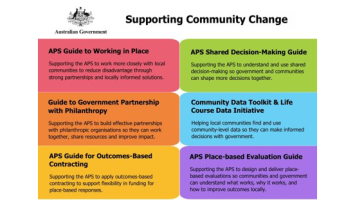
Published
Discover practical tools, insights and learning opportunities to strengthen engagement and partnership capability across the APS.

Published
Chloe Tallentire's AI CoLab journey shows how structured, collaborative AI tools empower APS teams to navigate complexity with greater clarity and confidence.
Courses

This learning offering provides a clear, consistent understanding of how AI works and what to consider when making responsible choices.

APS Foundational Data Literacy Pathway helps APS employees build core data skills, understand governance and legislation, and confidently use data to support evidence-based decisions and better outcomes.

Data for SES Leaders builds data literacy and evidence-based decision-making skills, helping APS leaders use data confidently, manage risks, strengthen governance and foster data-driven cultures.
This course provides participants with an understanding of data’s role within government, including principles of data security, ethical data use, and the importance of evidence-based decision-making and data storytelling to inform policy and service delivery.
National Archives of Australia provides guidance on information storage decisions. It provides advice about the different types of business information agency staff and contractors can or can't destroy as part of their daily work.
This course is provided to increase awareness and skills for Australian Government (Commonwealth) agencies to make use of metadata to help manage information assets (data, information and records).
The Turning Data Into Information course is designed to build your analytical skills and equip you with a range of statistical tools and techniques that will help you both understand and analyse data in the context of a research question or issue
OAIC’s Privacy Impact Assessment (PIA) eLearning helps practitioners identify, assess and manage privacy risks, embed privacy-by-design, meet privacy obligations, and improve project governance and trust.
The Foundations of Net Zero Emissions Reporting course is intended to enhance understanding of the reporting requirements under the Climate Action in Government Operations.

This course will raise counter foreign interference awareness across all levels of Government (their organisations and staff), the education and research sector and industry.
Programs

This eLearning program is provided to increase digital preservation awareness and skills in Australian Government (Commonwealth) agencies.
Resources
Hear about the experiences and lessons learned by agencies and data professionals in the Australian Public Service (APS).
Protect devices, content, personal data and privacy in digital environments.
The APS Data Capability Framework helps APS employees understand, assess and develop data skills, knowledge and behaviours, supporting career growth, workforce planning and evidence-based decision-making.
The Graduate Data Network (GDN) unites 1,000+ APS graduates across 40+ agencies to improve data use, build capability, drive collaboration, and support better public sector outcomes for Australians.
Digital Profession quick guides help you with basic concepts and ideas to integrate modern ways of working in your organisation.
A content strategy sets the foundation for the creation, structure and governance of content. You should apply a content strategy when building new services or redesigning web content, or for big changes such as machinery-of-government updates.
The Evaluation Profession encourages you to develop critical skills in evaluation. Those skills contribute to shaping programs and policies that make a difference. By joining you will contribute to fostering accountability, transparency and continuous improvement.
The 2030 vision from the Australian Government is to deliver simple, secure and connected public services, for all people and business, through world class data and digital capabilities.
Join a community of data and digital professionals at all levels of government. Connect with your peers, access training and learn from community meetups.
The Australian Government’s Digital Service Standard provides best-practice guidance for designing user-centred, accessible and secure digital services, helping agencies deliver simpler, more effective experiences for people and businesses.
Yearly reports detail how the Data Profession program has progressed since it began.
The APS Data Profession Employee Value Proposition (EVP) highlights the purpose, impact and career opportunities of data roles in the APS, supporting workforce attraction, development and retention across government.
Data Job Role Personas provide the building blocks for identifying data capability requirements and career pathways for the data profession.
data.gov.au provides access to thousands of Australian government datasets and APIs, helping users build data literacy, support evidence-based decisions, drive research, and inform policy, services and innovation.
The Australian Government’s Data, Digital and Cyber Workforce Plan outlines how the APS will attract, develop and retain data, digital and cyber talent, building capability to deliver secure, modern and user-focused government services.
This video is recorded from the APS Academy's Craft Conversations event for the Data Profession month in June 2022.
Celebrating excellence in data across the APS through recognition of innovation, leadership and impact.
The 2030 APS Data Profession Strategy builds a skilled, connected and future-ready data workforce, strengthening data capability, collaboration and evidence-based decision-making across the APS.
A template to plan out your evaluation, including the questions you’ll ask and what data you’ll collect.
This course provides a platform for users to access public policy research as well as provide information on upcoming learning, events and networking opportunities.
Information on the four principles of WCAG, including tips on how to design web content to ensure that it is perceivable, operable, understandable and robust.
Learn more about GovAI and the AI tools available to the APS.
Building APS capability to use futures techniques in policymaking through horizon scanning, visioning and scenario planning.
The Federal Register of Legislation (the Register) is the authorised whole-of-government website for Commonwealth legislation and related documents.
A twelve page template to document your evaluation strategy.
A menu of questions to inform your evaluation strategy.
A one page template to plot out how your policy is intended to work. It will help you understand the relationships between resources, activities and outcomes of the policy, which is critical to a successful evaluation.
The ‘Integrity Good Practice Guide’ includes a range of practical examples of how you can contribute to a pro-integrity culture.
The Digital Transformation Agency provides guidance on the Service design and delivery process to support agencies to meet the Digital Service Standard criteria.
A directory of behavioural economics and behavioural science academics.
The Office of the Australian Information Commissioner (OAIC) has a suite of learning resources to help you understand your responsibilities under Privacy and Freedom of Information legislation.
The Office of the Australian Information Commissioner (OAIC) is the independent national regulator for privacy and freedom of information.
Services Australia’s Program Practice Frameworks can be used as standalone resources, or as suite of connected products to support staff when managing programs and projects, engaging with stakeholders and conducting analysis. The Frameworks feature focus areas which include a set of guidelines, applied tools, resources and links to other relevant and appropriate materials.
Nesta's online toolkit provides tools and resources to encourage innovative policy development.
The Protective Security Policy Framework (PSPF) prescribes what Australian Government entities must do to protect their people, information and resources, both domestically and internationally.
The APS Academy has through Cathy Fussell created a series of, ‘How to…’ articles to provide guidance on what information and avenues are available.
Tools, guidance and resources to support staff in understanding, valuing and practicing good record keeping - ensuring continued delivery of trusted and transparent services.
Interact, communicate and collaborate through digital technologies while being aware of cultural and generational diversity.
Identify needs and problems, and resolve conceptual problems and problem situations in digital environments.
Articulate information needs, to locate and retrieve digital data, information and content.
Embed digital by default by promoting and championing digital ways of working.
Create and edit digital content, improve and integrate information and content, and understanding how copyright and licences are to be applied.
Find information on why accessibility is in the Digital Service Standard and how you can meet the Standard through applying accessibility principles in the Discovery, Alpha and Beta stages of design.
Accessibility is a mandatory standard for government agencies. Understand agency responsibilities and commitments and access guidance on designing accessible and inclusive content that is respectful of our diverse nation.
For Learning & Development Teams and Practitioners
The Evaluation Profession encourages you to develop critical skills in evaluation. Those skills contribute to shaping programs and policies that make a difference. By joining you will contribute to fostering accountability, transparency and continuous improvement.
A content strategy sets the foundation for the creation, structure and governance of content. You should apply a content strategy when building new services or redesigning web content, or for big changes such as machinery-of-government updates.
The Australian Government’s Data, Digital and Cyber Workforce Plan outlines how the APS will attract, develop and retain data, digital and cyber talent, building capability to deliver secure, modern and user-focused government services.
A twelve page template to document your evaluation strategy.
A menu of questions to inform your evaluation strategy.
A template to plan out your evaluation, including the questions you’ll ask and what data you’ll collect.
A one page template to plot out how your policy is intended to work. It will help you understand the relationships between resources, activities and outcomes of the policy, which is critical to a successful evaluation.
Identify needs and problems, and resolve conceptual problems and problem situations in digital environments.
Protect devices, content, personal data and privacy in digital environments.
Articulate information needs, to locate and retrieve digital data, information and content.
Embed digital by default by promoting and championing digital ways of working.
Create and edit digital content, improve and integrate information and content, and understanding how copyright and licences are to be applied.
Interact, communicate and collaborate through digital technologies while being aware of cultural and generational diversity.
Find information on why accessibility is in the Digital Service Standard and how you can meet the Standard through applying accessibility principles in the Discovery, Alpha and Beta stages of design.
Accessibility is a mandatory standard for government agencies. Understand agency responsibilities and commitments and access guidance on designing accessible and inclusive content that is respectful of our diverse nation.
Information on the four principles of WCAG, including tips on how to design web content to ensure that it is perceivable, operable, understandable and robust.
Join a community of data and digital professionals at all levels of government. Connect with your peers, access training and learn from community meetups.
The 2030 vision from the Australian Government is to deliver simple, secure and connected public services, for all people and business, through world class data and digital capabilities.
The Digital Transformation Agency provides guidance on the Service design and delivery process to support agencies to meet the Digital Service Standard criteria.
The Australian Government’s Digital Service Standard provides best-practice guidance for designing user-centred, accessible and secure digital services, helping agencies deliver simpler, more effective experiences for people and businesses.