

By the National Anti-Corruption Commission
Every day, APS employees make decisions that affect people, programs and public resources. Some are straightforward. Others involve high stakes, competing priorities or incomplete information.
Ethical decision-making helps us navigate these situations with integrity. It is not just for major policy decisions or high-profile issues. It is part of everyday work, from providing advice and managing resources to engaging stakeholders and responding to emerging challenges.
The National Anti-Corruption Commission has identified decision-making by public officials as an area where corruption risks can arise. To help prevent, detect and reduce risks, it has identified 7 practices that support ethical decision-making.
Ethical decision making means making decisions and giving advice honestly, impartially and based on the law and available evidence. When faced with a difficult decision, these 7 practices can help guide your approach.
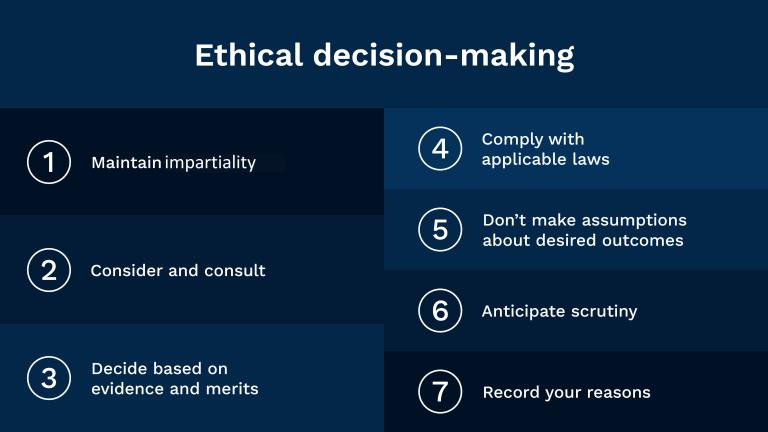
Maintain impartiality
APS employees work within the policy direction of the government of the day. Even so, good decision making relies on advice that is impartial, evidence-based and candid. Sometimes that means presenting information that is unwelcome or challenges assumptions. Doing this helps ensure decisions are made on their merits and in the public interest.
Consider and consult
Important decisions rarely benefit from relying on a single perspective. Taking time to consult the right people can help identify risks, test assumptions and uncover information you might otherwise miss. Consultation also promotes transparency and accountability. Think carefully about who should be consulted and make sure any advice is informed and impartial and be conscious of any conflicts of interest.
Decide based on evidence and merits
Good decisions are grounded in reliable information and a clear understanding of the issues.
Gather the information you need, assess its quality and relevance, and focus on what matters most. Be prepared to separate useful evidence from information that may distract from the real issue. If information is incomplete, acknowledge the uncertainties and explain how you have taken them into account.
Comply with the law
Decision-makers should understand the legal framework that applies to their work, including any powers, obligations or limitations relevant to the decision. Complying with the law is not optional.
Legal advice can be an important input, but responsibility for the decision remains with the decision-maker. Understanding the legal context helps ensure decisions are lawful, defensible and consistent with public sector responsibilities.
Don’t make assumptions about desired outcomes
Assumptions can influence decisions without us realising it. This includes assumptions about what managers, senior officials or ministers may want to hear.
Ethical decision-making means grounding advice in evidence, the law and the public interest, rather than perceived expectations. Where assumptions exist, test them. Raising risks or alternative perspectives may be uncomfortable, but it helps decision-makers make informed choices.
Anticipate scrutiny
Decisions made in the public sector may be subject to review, challenge or public scrutiny. This is a normal and important part of accountable government.
A useful question is – could I clearly explain how and why I made this decision? Considering potential scrutiny can help strengthen your process and maintain public confidence in government institutions.
Record your reasons
Keeping clear and accurate records is an essential part of ethical decision-making. Documenting the information considered, the key factors and reasons for a decision supports transparency and accountability. It also makes it easier to explain and justify decisions if they are later reviewed or questioned.
Putting ethical decision-making into practice
Ethical decision-making is not about finding a perfect answer in every situation. It is about approaching decisions thoughtfully, transparently and with integrity.
These practices provide a practical foundation for navigating complexity, managing corruption risks and maintaining trust in public administration.
You can find our guide to ethical decision-making at nacc.gov.au.