

Chloe Tallentire's AI CoLab journey shows how structured, collaborative AI tools empower APS teams to navigate complexity with greater clarity and confidence.
Stakeholder engagement
Contents
Latest news
Published
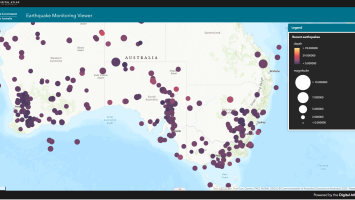
Australia's Digital Atlas unites trusted national data into one platform, enabling informed place-based decisions and collaboration across government.

Published
AI tools help with daily tasks and drive large-scale projects in the APS, improving productivity and public services. Examples include faster DVA claims, NFSA’s transcription engine, and ghost net cleanups.
Upcoming events

Date
Location
Australian Capital Territory
This course is delivered on 01/10/2026, by face-to-face consisting of one 8-hour session.

Date
Location
Australia wide (Virtual)
This course is delivered from 06/10/2026 to 21/10/2026, by face-to-screen consisting of one 5.5-hour and five 4-hour sessions.

Date
Location
Australia wide (Virtual)
This course is delivered from 20/10/2026 to 21/10/2026, by face-to-screen consisting of two 3-hour sessions.
Date
Location
Australia wide (Virtual)
This course is delivered on 11/11/2026, by face-to-screen consisting of one 90-minute session.

Date
Location
Australia wide (Virtual)
This course is delivered from 23/11/2026 to 24/11/2026, by face-to-screen consisting of one 7-hour session and one 3-hour session.
Date
Location
Australia wide (Virtual)
This course is delivered on 02/12/2026, by face-to-screen consisting of one 8-hour session.
Date
Location
Australia wide (Virtual)
This course is delivered on 16/02/2027, by face-to-screen consisting of one 8-hour session.
Date
Location
Australia wide (Virtual)
This course is delivered from 22/02/2027 to 23/02/2027, by face-to-screen consisting of two 3-hour sessions.
Date
Location
Australia wide (Virtual)
This course is delivered on 03/03/2027, by face-to-screen consisting of one 90-minute session.

Date
Location
Australia wide (Virtual)
This course is delivered on 11/03/2027, by face-to-screen consisting of one 6-hour session.
Date
Location
Australia wide (Virtual)
This course is delivered on 29/04/2027, by face-to-screen consisting of one 8-hour session.
Date
Location
Australia wide (Virtual)
This course is delivered from 04/05/2027 to 05/05/2027, by face-to-screen consisting of two 3-hour sessions.
Date
Location
Australia wide (Virtual)
This course is delivered from 10/05/2027 to 25/05/2027, by face-to-screen consisting of one 5.5-hour and five 4-hour sessions.
Date
Location
Australian Capital Territory
This course is delivered on 16/06/2027, by face-to-face consisting of one 8-hour session.
Date
Location
Australia wide (Virtual)
This course is delivered from 22/06/2027 to 23/06/2027, by face-to-screen consisting of one 7-hour session and one 3-hour session.
Date
Location
Australian Capital Territory
This course is delivered on 24/06/2027, by face-to-face consisting of one 7-hour session.
Date
Location
Australia wide (Virtual)
This course is delivered on 24/06/2027, by face-to-screen consisting of one 90-minute session.
Courses
APS Unlocked brings together new and returning members of the APS to engage with experienced APS leaders and practitioners, who will share essential information and tips for a successful and productive career in the APS.

Learn the skills required to design, develop and deliver a briefing. Understand the development and role of question time briefs, ministerial talking points for media engagements, ministerial advisor briefings, hot issues briefings, ministerial submissions and second reading speeches.
Identify and examine internal and external work relationships, their relevance and the importance of achieving mutual success. Share and develop good ways to plan for and participate in meetings.

The program focuses on developing APS Change Management capability to build the capacity for government to deliver well considered and well-planned change.

The Change Management Practitioner program is an online program offering extension learning to participants who have completed the Change Management Foundation Program.
Build the knowledge, skills, and tools necessary to engage in gender analysis across various public policy fields.

The EL2 Leadership Program supports leaders to move beyond their technical expertise and develop essential management and leadership capabilities.
This program helps to identify the benefits of working effectively with stakeholders. Understand the most appropriate stakeholders and the most appropriate form of engagement.
Footprints is a framework that supports APS employees to continually increase and enhance their cross-cultural knowledge and understanding.
This program will increase the confidence of managers in using formal authority to achieve business outcomes. It includes a series of workplace simulations and role plays.

The Multicultural Organisation – Staff Awareness, Innovation and Capability (MOSAIC) digital learning magazine aims to enhance multicultural awareness in the APS.

Equip yourself with essential cultural capabilities and a deep understanding of Pacific cultures, societies, and economies.

The program strengthens the leadership capability of experienced senior executives to effectively deliver their key accountabilities.
Learn about the business context of the APS as well as develop skills and share high-value work practices required to effectively provide professional executive assistance.
This learning experience provides practical strategies to help you develop policy and programs that consider the impact in relation to First Nations peoples.

This course is designed to help improve partnerships with ministers by uplifting the capability of APS staff to engage with ministers and their advisors.
Programs
The APS Engagement and Partnerships Capability Hub supports APS employees and agencies to build their capacity to genuinely partner and engage to develop more fit-for-purpose policies and services. This includes partnering with First Nations people, communities and organisations, and engaging with people and communities, non-government sectors, academia and industries.
The Excellence in Professional Regulation program is building capability and supporting the professional development of Australian Government regulators.
Resources
Explore the power of emerging tech to drive digital transformation across the APS. The Digital Profession will help you connect with experts, gain unique training opportunities and prepare you to lead in a digital age.
Providing a space for officials to collaborate, share best practice, and hear from industry and government experts, the Commonwealth Procurement and Contract Management Community of Practice is open to all Commonwealth officials.
data.gov.au provides access to thousands of Australian government datasets and APIs, helping users build data literacy, support evidence-based decisions, drive research, and inform policy, services and innovation.
The APS Mobility Framework promotes temporary moves across agencies and sectors, helping employees build skills, expand networks, support priority work and strengthen a connected, agile One APS culture.
Working in place is a collaborative approach where government, communities and stakeholders work together to develop tailored solutions to local challenges.
The Learning Quality Framework is a principle-based model for assessing, building, procuring and delivering high quality, effective and innovative learning experiences.
A checklist for designing, producing and procuring content that supports accessible quality learning and development in the APS. Included are links to information and free online tools that allow you to check content is compliant with the WCAG standards.
The Charter of Partnerships and Engagement sets out principles for improving the way the APS puts people and business at the centre of policy, implementation and delivery.
Empower communities through genuine partnership. Learn how shared decision-making strengthens government outcomes and puts communities at the centre.
The APS Reform Office has created a website with resources and links on how public service agencies are implementing APS Reform initiatives.
In this video, APS staff from around the country answer the question: ‘What does working together in the APS mean to you?’
The Aboriginal and Torres Strait Islander Cultural Capability Framework provides a basis for building the cultural capability of the Commonwealth public sector.
Use this Allyship toolkit to better understand how to support behavioural change and cultural safety and to address racism and unconscious bias.
Find guidance papers and a directory of links to essential public administration resources to support the partnership between the APS and Ministerial offices.
The Guide to Policy Impact Analysis is intended to inform Australian Public Service policy making — ensuring that advice to government is accompanied by robust analysis, data and an accurate overview of the effects of proposed policies on our community.
A practical guide to help APS taskforces through every stage of the taskforce lifecycle.
The Policy Project is an initiative of the New Zealand Government to support individual who provide advice to decision makers, access relevant tools, advice and information.
Community of Practice for EL1/EL2 counter fraud or risk officials to drive leading edge control testing capability in the Australian Government.
A list of questions to give you a quick 'reality check' on your policy advice.
Building APS capability to use futures techniques in policymaking through horizon scanning, visioning and scenario planning.
This guidance outlines the requirements of the Directions on Stewardship and provides further interpretation, advice, and case studies on the application of Stewardship.
The relationship between ministers and officials is fundamental to our system of government. The foundation of that relationship, like any relationship, is mutual respect. Learn through insights from conversations at the political administrative interface.
An APS Integrity Hypotheticals – Conflict of Interest panel recording of discussion stemming from scenarios that highlight the grey (and not so grey) areas of Integrity decision making.
Hear what a day in the life at a Minister’s office is like and what is the role of a Department Liaison Officer and how do you communicate with them. And what happens when things don’t go to plan?
Delivering for Australians outlines the Government’s reform agenda in response to the independent review of the APS.
This is the website and final report for the independent review panel of the the Australian Public Service (APS) led by David Thodey AO.
The Australian Public Service Commission provides practical tips and tools for engaging with stakeholders, particularly when establishing a taskforce.
This ‘Practice Group’ was created to foster and support the use of deliberative practices in government. It contains papers researched and written on public deliberation.
This edition of audit insights outlines key messages from Auditor-General reports which have examined the rapid implementation of government initiatives.
Behavioural insights tools assist understanding human behaviour, which can inform policy design.
Professor Robert Cialdini developed what he describes as ‘six universal principles of persuasion’. These fundamental human states allow leaders to increase the likelihood of influencing others.
Brene Brown informs leaders how they can give constructive and honest feedback from a place of engagement, rather than judgment. She calls it ‘Sitting on the same side of the table,’ as someone.
Caroline Webb (2018) discusses the ‘discover-defend axis’ which is a model showing that the brain has two ‘modes’ which shape the way humans interact.
Lisa Lahey (2017) explores how leaders can transcend habitual patterns, and considers how to navigate change and complexity.
In this video, Brené Brown (2013) explains how to create a genuine empathic connection through understanding ourselves and our own fragilities.
This video is recorded from the March APS Academy's Craft Conversations event for Implementation and Services Craft month in February 2022.
The case study examines the approach taken for the 2021 Census and a number of ‘firsts’ achieved in its successful delivery.
The National Regulators Community of Practice is an active network of public sector regulators from all 3 levels of government.
Use this checklist to review your decisions to ensure they are defensible. You can also use this if you are recommending a decision.
The event was focused on pathways to more culturally informed engagement and partnership with First Nations communities and was led by Sam Jeffries with Dr Rachel Bacon.
Community of Practice for EL1/EL2 counter fraud or risk officials to learn about fraud and corruption risk management.
Services Australia’s Program Practice Frameworks can be used as standalone resources, or as suite of connected products to support staff when managing programs and projects, engaging with stakeholders and conducting analysis. The Frameworks feature focus areas which include a set of guidelines, applied tools, resources and links to other relevant and appropriate materials.
Multiple different Impact Analysis processes are now required during new policy development. Five key Agencies have combined to share key resources you need to know when developing any new policy
This is a tool to assess the maturity of supports an agency has in place to build capability to effectively engage.
The APS Academy has through Cathy Fussell created a series of, ‘How to…’ articles to provide guidance on what information and avenues are available.
Good contract management is an essential component in achieving value for money for Australian Government procurements. The Australian Government Contract Management Guide provides practical process guidance at a practitioner level for Commonwealth officials who manage contracts.
This framework helps public servants better engage with citizens, community and businesses.
This video from AusIndustry Regional Managers provides practical ‘top tips’ for successful businesses engagement.
The Department of Industry, Science, Energy and Resources provides an interactive guide to the ‘right’ engagement type to choose when engaging with stakeholders and citizens.
The Centre’s purpose is to strengthen counter fraud arrangements across the Australian Government. It provides educational material, leading practice guides, toolkits and training.
The Guidance sets out the behaviours for improving the way the APS puts people and business at the centre of policy, services and delivery.
The Style Manual is for everyone who writes, edits or approves Australian Government content. Use it to create clear and consistent content that meets the needs of users.
The First Nations Partnerships Playbook is an APS resource to guide public servants to build strong and enduring partnerships with First Nations peoples, communities and organisations.
Designed for all APS levels, this pathway helps you map a learning journey to build skills in engagement and partnership.
The Government writing handbook is a companion to the Australian Government Style Manual with greater focus on the craft of writing.
Embed digital by default by promoting and championing digital ways of working.
This decision tool helps public servants pick the right engagement technique for the problem at hand and includes a catalogue of such techniques to apply.
For Learning & Development Teams and Practitioners
Active voice clearly shows who is doing what. The subject of the sentence performs the action (for example, “You submit the assessment” rather than “The assessment is submitted”).
Building once and tailoring locally creates reusable APS learning with shared core content and separate agency-specific modules, reducing duplication, improving consistency and supporting a One-APS approach.
The APS Learning Quality Framework Resources Hub provides practical tools, templates, case studies and research to help APS staff design high-quality, accessible and inclusive learning while sharing good practice across agencies.
The Government writing handbook is a companion to the Australian Government Style Manual with greater focus on the craft of writing.
The Style Manual is for everyone who writes, edits or approves Australian Government content. Use it to create clear and consistent content that meets the needs of users.
The Learning Quality Framework is a principle-based model for assessing, building, procuring and delivering high quality, effective and innovative learning experiences.
This decision tool helps public servants pick the right engagement technique for the problem at hand and includes a catalogue of such techniques to apply.
Embed digital by default by promoting and championing digital ways of working.
A checklist for designing, producing and procuring content that supports accessible quality learning and development in the APS. Included are links to information and free online tools that allow you to check content is compliant with the WCAG standards.