



MasterCraft Series - SRW Scholars - Applying academic theory to the realities of APS work

Public servants use frameworks and mental models every day – often without labelling them as ‘theory’. At the same time, much of academia revolves explicitly around the development of ‘theory’ but often in ways that feel distant from the immediate concerns of government. Too often insights from the ivory tower and the realities of government craft are disconnected.
This masterclass explores how academic theory, including Indigenous research methodologies, can inform government craft. Drawing on real policy challenges facing government, the session will show how theory can be applied in ways that are useful for APS staff working across portfolios.
*Please note this event will be recorded. You can view this video and other MasterCraft Series events here.
Presenters
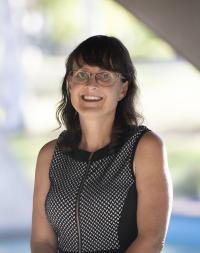
Kylie Bishop
Kylie Bishop is a Bundjalung woman from northern NSW. She grew up in the bush where her love for Country originated. She has worked in the public service for over 25 years in various roles, working on environmental issues including First Nations matters and is devoted to the wellbeing of others. Kylie has worked on First Nations water, cultural capability and the Environment Protection and Biodiversity Conservation Act 1999.
She is completing a Master Arts, Indigenous Knowledge at Charles Darwin University with a Pat Turner scholarship. Her interest in linking First Nations knowledge with Western science and how we can incorporate First Nations research methodologies into policy development. Her passion lies in bridging Indigenous Knowledge with Western science to enhance policy making. By integrating Indigenous Knowledge into departmental work in a culturally respectful and practical manner, Kylie aims to improve environmental stewardship and foster positive intergenerational change for Indigenous communities.
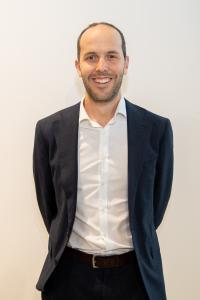
Nikolai Drahos
Nikolai has been in the Australian Public Service since 2012, where he has led specialist research and analysis at the Climate Change Authority and the Office of the Chief Economist within the Department of Industry, Science, Energy and Resources.
He is a Sir Roland Wilson scholar at The Australian National University School of Regulation and Global Governance. His research examines a key climate policy challenge – reducing methane emissions from energy and agriculture – and how support for important climate policy reforms can build across industry, finance and civil society.
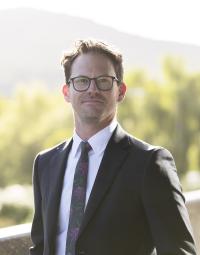
Kristian Hollins
Dual-trained in journalism and law, Kristian has held a range of roles in the Department of Home Affairs since 2015, with a particular focus on protection assessment and administrative law. Kristian was previously a Department of Immigration and Border Protection Research Fellow in the Migration and Border Policy Project at the Lowy Institute, undertaking research on comparative approaches to establishing identity in undocumented asylum seekers. Kristian most recent role was in the Refugee, Humanitarian and Settlement Division, advising on lawful decision-making, litigation outcomes, and protection assessment reform.
He is a Sir Roland Wilson scholar at The Australian National University School of Regulation and Global Governance. His research considers how administrative decision-makers make findings of fact in the absence of verifiable evidence. Through the lens of protection obligations assessment, he examines how decision-makers exercise their discretionary powers in probing, weighing, and constructing their assessment.
Facilitator
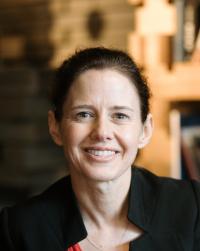
Dr Cathy Fussell, Home Affairs
Dr Cathy Fussell is an Australian Government public servant and academic. As a public servant, Cathy has over 20 years’ experience in policy and program delivery, and data analytics strategy and capability development. Her work currently focuses on using data for outcomes-driven policy delivery and adaptation.
As an academic, Dr Fussell focuses on addressing the bias towards theorising power in its negative exercise, neglecting the positive. That is, the capacity to achieve shared outcomes. She is rethinking the concepts of power and value in light of complex systems theory and the system dynamics of ethical and effective governing.
Cathy is a visiting fellow at ANU’s School of Cybernetics and a Sir Roland Wilson Foundation alumna and recent board member. She is an active champion of APS-academic partnerships.
Participant benefits
- Understand what theory is and isn’t.
- Learn when and how theory is useful in APS work.
- See the application of theory to specific issues, such as climate, resources and immigration.
Suitable for
All Staff
Category and User level
This learning experience aligns with the Working in Government Craft at the Foundation level.
Price
Free of charge.