




Chloe Tallentire's AI CoLab journey shows how structured, collaborative AI tools empower APS teams to navigate complexity with greater clarity and confidence.
Government
Contents
Latest news

Published
The APS Academy 2026–27 course calendar is now live. Plan your professional development with flexible learning options across all APS capability areas.
Published
Two new climate microcredentials are now available for the APS through RMIT Online. These are 6-week courses on climate fundamentals & emissions reduction
Upcoming events
Date
Location
Australian Capital Territory
This course is delivered on 05/08/2026, by face-to-face consisting of one 7-hour session.
Date
Location
Australian Capital Territory
This course is delivered on 08/09/2026, by face-to-face consisting of one 8-hour session.
Date
Location
Australia wide (Virtual)
This course is delivered from 07/10/2026 to 08/10/2026, by face-to-screen consisting of two 3-hour sessions.
Date
Location
Australian Capital Territory
This course is delivered on 28/10/2026, by face-to-face consisting of one 8-hour session.
Date
Location
Australian Capital Territory
This course is delivered on 12/11/2026, by face-to-face consisting of one 7-hour session.
Date
Location
Australia wide (Virtual)
This course is delivered from 15/02/2027 to 16/02/2027, by face-to-screen consisting of two 3-hour sessions.
Date
Location
Australian Capital Territory
This course is delivered on 16/03/2027, by face-to-face consisting of one 8-hour session.
Date
Location
Australia wide (Virtual)
This course is delivered on 23/03/2027, by face-to-face consisting of one 7-hour session.
Date
Location
Australia wide (Virtual)
This course is delivered from 18/05/2027 to 19/05/2027, by face-to-screen consisting of two 3-hour sessions.
Date
Location
Australian Capital Territory
This course is delivered on 16/06/2027, by face-to-face consisting of one 7-hour session.
Date
Location
Australian Capital Territory
This course is delivered on 23/06/2027, by face-to-face consisting of one 8-hour session.
Courses

This course will help build your foundational knowledge about important aspects of Australia’s system of government, structures, and frameworks that relate to your work in the APS.

Gain current information and insights into the Cabinet system, delivered in an engaging and educational way. Become familiar with Cabinet principles and conventions, key steps and timeframes, template requirements, and who to consult.

This course covers the role of the secretariat when working in government, teams and stakeholder groups. Examine protocols and learn to coordinate and prepare meeting agendas and other documents.

This course is designed to help improve partnerships with ministers by uplifting the capability of APS staff to engage with ministers and their advisors.
APS writing fundamentals is Course 1 of the Writing in the APS self-paced interactive eLearning courses. It covers the fundamentals of writing in the Australian Public Service, drawing from Australian Government Style Manual guidance.
Programs
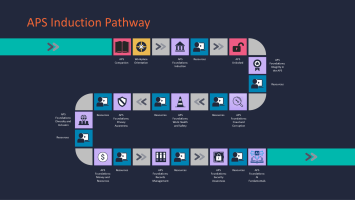
The APS Induction pathway offers practical skills, foundational learning in the structure and functions of the Australian Government and an introduction to core concepts that underpin work in the APS.
Resources
The Australian Government Directory is a guide to the structures, organisations and key people in the Australian Government.
The Office of Parliamentary Counsel provides training and advice relating to drafting and legislative processes.
The ILS provides capability development guidance for individuals and agencies in the form of descriptions and behaviours for all levels in the Australian Public Service.
An ANZSOG supported study examines the proposition that managers who exercise political astuteness are more effective. For public managers, formal and informal politics is an integral part of their environment.
Learn more about GovAI and the AI tools available to the APS.
Find guidance papers and a directory of links to essential public administration resources to support the partnership between the APS and Ministerial offices.
The Federal Register of Legislation (the Register) is the authorised whole-of-government website for Commonwealth legislation and related documents.
This fact sheet from the Parliament of Australia explains the Constitution, which is the foundation that establishes the rules for how Australia is governed.
The Parliamentary Education Office (PEO) website has everything you need to know about the role, function, structure and people of the Australian Parliament.
Administrative Arrangements Orders (AAOs) formally allocate executive responsibility among ministers. They set out which matters and legislation are administered by which department or portfolio.
The Parliament of Australia website publishes extensive information on Parliamentary business, members, bills, committees and more. You can also live stream proceedings.
This video is recorded from the November APS Academy's Craft Conversations event for Working in Government Craft month in October 2021.
Lisa Lahey (2017) explores how leaders can transcend habitual patterns, and considers how to navigate change and complexity.
The budget process is the decision-making process for allocating public resources to the Government’s policy priorities.
The Commonwealth resource management framework governs how officials in the Commonwealth public sector use and manage public resources.
This change occurs when the Government decides to change the way Commonwealth responsibilities are managed. The Australian Public Service Commission provides an outline of the MoG process.
This fact sheet from the Parliamentary Education Office explains the law-making process in the Australian Parliament. It describes where ideas for laws come from and law-making history.
This is the website and final report for the independent review panel of the the Australian Public Service (APS) led by David Thodey AO.
This guidance sets out the threshold of gifts and benefits which agency heads must declare publicly and sets out best practice on how this information should be published.
Delivering for Australians outlines the Government’s reform agenda in response to the independent review of the APS.
Our ability to respond to changing demands, and leverage the opportunities available to us, is underpinned by performance management practices that translate societal and Government expectations into individualised performance expectations for APS employees.
This event delved into how AI technologies can be leveraged to enhance of government operations, improve service delivery, and foster innovation in policy formation.
Information and resources from the Australian Public Service Commission covering Integrity in the APS.
Australia has the opportunity to make best use of our waste resources by recycling them to create new products. The Department of Climate Change, Energy, the Environment and Water have created a Sustainable Procurement Guide to assist in this decision making.
Multiple different Impact Analysis processes are now required during new policy development. Five key Agencies have combined to share key resources you need to know when developing any new policy
The Australian Policy Cycle designed by James Gulliver Hancock provides an easy to follow visual of the key milestones required for best practice government decision making.
Tools, guidance and resources to support staff in understanding, valuing and practicing good record keeping - ensuring continued delivery of trusted and transparent services.
The Budget Papers support the Budget-related decisions of government, providing the fiscal outlook for the Australian economy and highlighting major new initiatives of the government.
Interact, communicate and collaborate through digital technologies while being aware of cultural and generational diversity.
Identify needs and problems, and resolve conceptual problems and problem situations in digital environments.
Protect devices, content, personal data and privacy in digital environments.
Articulate information needs, to locate and retrieve digital data, information and content.
Embed digital by default by promoting and championing digital ways of working.
For designers of digital services, the Australian Government Digital Service Standard sets out the best-practice principles that are simple, clear and fast.
For Learning & Development Teams and Practitioners
Identify needs and problems, and resolve conceptual problems and problem situations in digital environments.
Protect devices, content, personal data and privacy in digital environments.
Articulate information needs, to locate and retrieve digital data, information and content.
Embed digital by default by promoting and championing digital ways of working.
Interact, communicate and collaborate through digital technologies while being aware of cultural and generational diversity.
The Australian Government Directory is a guide to the structures, organisations and key people in the Australian Government.
For designers of digital services, the Australian Government Digital Service Standard sets out the best-practice principles that are simple, clear and fast.