

MasterCraft Series - SRW Scholars - Partnerships to Close the Gap

Too often, policy engagement happens to communities rather than with them. Traditional approaches can position Indigenous peoples as problems to be managed rather than partners with valuable expertise.
This session* would offer a different path forward. Drawing on our research in co-design and public policy, we will explore how the APS can build genuine partnerships that centre Indigenous people's lived experience and knowledge systems in policy development. Addressing the Closing the Gap Priority Reform 3, we are aiming to move from consultation to co-design, from stakeholder management to authentic collaboration.
*Please note this event will be recorded. You can view this video and other MasterCraft Series events here.
Presenters
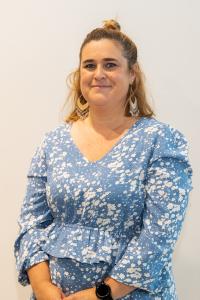
Natalie Bryant
Natalie is a Yuin woman from the South Coast of NSW. She is currently a Public Policy Manager at the Productivity Commission working on the review of the National Agreement on Closing the Gap. She has held a variety of roles across the Commonwealth and NSW public service. She has a strong interest in health and leadership, and is passionate about the development and implementation of programs that provide the best outcomes for all people but particularly Aboriginal and Torres Strait Islander peoples.
Natalie is a Pat Turner scholar at The Australian National University Research School of Social Sciences. Her research explores the structural exclusion of Indigenous perspectives in the development of public policy.
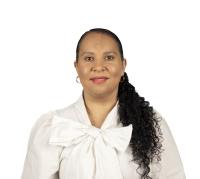
Dr Claire Sainsbury
Claire is from the Maluilgal nation in the Torres Strait and grew up on Badu Island. She started her career as a primary school teacher and joined the Australian Public Service in 2007. Claire has undertaken various leadership, policy, coordination and program management roles, across a range of agencies, including the Department of Education, Employment and Workplace Relations, the Australian Public Service Commission, the Department of the Prime Minister and Cabinet and the National Indigenous Australians Agency.
Claire completed her PhD at the Australian National University Research School of Social Sciences in 2024 under a Pat Turner scholarship. Her thesis focused on the Commonwealth’s role in redressing Aboriginal and Torres Strait Islander educational inequity.
Claire is a senior executive in the APS and is currently working at the Australian Tertiary Education Commission where she leads the Equity and Tertiary Branch.
Facilitator
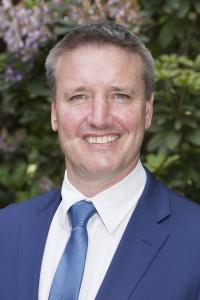
Dr Anthony Cowley
Dr Anthony Cowley works at the Department of Social Services, contributing to the design and integration of performance and partnership functions under the Department of Social Services Grants Hub. He has over 25 years’ experience in the Australian Public Service, spanning several portfolios including Industry, Education, Health, Social Services and the Australian Public Service Commission.
Anthony’s PhD research used a mixed-methods approach to examine the values and priorities that drive decision making by Australia’s federal public servants as they make critical choices about public spending (through grants) for social welfare.
Participant benefits
- Understand how to use Indigenous people’s lived experience and knowledge systems to inform and co-design policy development
- Improve your collaboration skills
Suitable for
All Staff
Category and User level
This learning experience aligns with the Working in Government Craft at the Foundation level.
Price
Free of charge.
Face-to-screen considerations
- Prior to the session start date, it is suggested that you check if your agency’s network has any restrictions using any virtual classroom platform. If you are unable to access the virtual classroom platform on your work device or network, you will need to use a personal device.
- Please ensure you have access to a working camera and microphone to participate.
Attendance (Virtual)
When you attend a virtual session:
- Provide your name or email when joining, as our attendance reports record this information from the virtual classroom platform.
- If you log into the session with a different email address to the one you are registered with, let us know to ensure your attendance is properly credited.
- If you join as a group from one location or cannot provide your details during the session, please email us afterwards so we capture your attendance.
- If we do not receive your information, you may receive a notice indicating you were not marked as attended.
* Capacity limits may apply. Please log into APSLearn to check availability.
- If the session is full or none of the additional sessions are suitable, you can express your interest, through APSLearn, for this event. You will be added to a mailing list to be notified when a new session becomes available.