





By Manolo Gonzalez, APSC
Integrity is often discussed in terms of rules, frameworks and compliance. But across the APS, it is equally shaped by learning, leadership and everyday practice – the core elements of APS Craft.
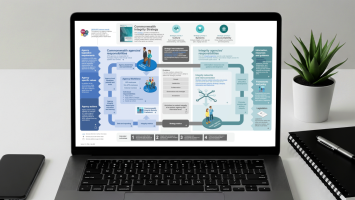
The new APS Integrity System schematic supports this capability building approach by helping public servants understand integrity as a connected system. It brings together people, leadership behaviours, frameworks, legislation and oversight to show how integrity operates across the APS and how individual roles contribute.
From a learning and development perspective, the schematic provides a powerful sense making tool. It helps move integrity from something abstract to something practical, embedded in how APS staff lead, make decisions, manage risk and work with others.
Staff who build strong integrity capability often describe a shift similar to what participants experience in APS Academy programs: moving from task focus to system awareness. Understanding how agency responsibilities and individual behaviours connect encourages more deliberate leadership and more confident decision making in complex environments.
For many public servants, integrity becomes clearer when it is linked to everyday actions – how teams speak up, how risks are escalated, how advice is prepared and how accountability is exercised. The schematic supports these conversations, reinforcing that integrity relies on compliance, and on leadership behaviours, psychologically safe cultures, good systems and continuous learning.
Used alongside learning programs, leadership development and team discussions, the APS Integrity System schematic supports the development of integrity as a core capability of APS craft – strengthening public trust through informed, ethical and connected practice.
The APS Integrity System schematic is available on the APSLearn website and available for all staff.
Any queries on the schematic can be directed to our Ethics team.