

MasterCraft Series - We need to talk about legal pluralism in public policy

Australia has more than one system of law – but most people don’t understand what that means. Key legal judgments have recognised that laws operated in Australia when the British arrived and brought their laws – and that those Indigenous legal systems continue; for example, native title rights and interests (Mabo’s case) and identity and citizenship (Love Thoms) are rights based in Indigenous law. To compare, a right to self-government has been recognised under common law in Canada, which co-exists with, but is distinct from federal, state or local governments. So, how can federalism operate with a fourth order of government? How do we recognise and operationalise legal pluralism in public policy? Does the Closing the Gap framework reflect an implied Indigenous autonomy or self-government?
This MasterCraft Series discussion* will invoke the expertise of Kevin Smith (President, National Native Title Tribunal) and Lisa Strelein (legal practitioner, Chalk & Behrendt), and will be chaired by Rachel Bacon (until recently Deputy Australian Public Service Commissioner). This panel conversation draws on the keynote addresses of Joshua Creamer (barrister) and Debra Mortimer (Chief Justice, Federal Court) at the 2026 AIATSIS Summit. https://aiatsis.gov.au/whats-new/events/aiatsis-summit-2026. This forum emerges from the partnership between the APS Academy and AIATSIS to enhance cultural competency across the APS and boost craft capabilities to engage with Aboriginal and Torres Strait Islander peoples, communities and organisation.
*Please note this event will be recorded. You can view this video and other MasterCraft Series events here.
Presenters
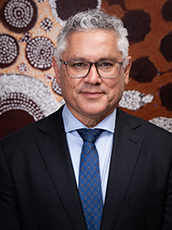
Kevin Smith, National Native Title Tribunal
Kevin Smith is the President of the National Native Title Tribunal. Kevin has traditional connections to Ugar and Erub in the Torres Strait. Kevin holds a law degree from the University of Queensland and was admitted as a solicitor in Queensland in 1994. Kevin has held a number of senior executive positions with Aboriginal and Torres Strait Islander organisations, and was the CEO of Queensland South Native Title Services.
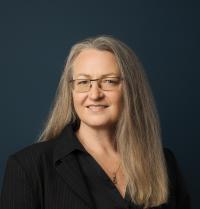
Lisa Strelein, Chalk & Behrendt
Lisa Strelein joined Chalk & Behrendt lawyers in 2023 after working at the Australian Institute of Aboriginal and Torres Strait Islander Studies for two decades, including as the Executive Director of Research and Education. Lisa holds degrees in Law and Commerce from Murdoch University and a PhD in Law from the ANU. Lisa has published extensively on native title issues since the Mabo decision in 1993. And Lisa was awarded a Commonwealth Public Service Medal in 2020.
Facilitator

Dr Rachel Bacon
Rachel Bacon held senior leadership roles across the APS and Northern Territory government, recently concluding her career as Deputy Commissioner at the APSC, where she led the government’s public sector reform agenda. Rachel now serves on the IPAA ACT Council and is Chair of the ACT Women’s Legal Centre. Rachel holds a PhD in administrative law from the University of Sydney.
Participant benefits
- Participants will gain a better understanding of the interactions between pre-existing Indigenous laws and subsequent laws.
- Build greater awareness of the context for the Closing the Gap agreement and First Nations public policy issues.
- Enhance cultural competencies and policy capabilities by hearing from experts outside of government.
Suitable for
All Staff.
Category and User level
This learning experience aligns with the Working in Government Craft at the Foundation level.
Price
Free of Charge.
Face-to-screen considerations
- Prior to the session start date, it is suggested that you check if your agency’s network has any restrictions using any virtual classroom platform. If you are unable to access the virtual classroom platform on your work device or network, you will need to use a personal device.
- Please ensure you have access to a working camera and microphone to participate.
Attendance (Virtual)
When you attend a virtual session:
- Provide your name or email when joining, as our attendance reports record this information from the virtual classroom platform.
- If you log into the session with a different email address to the one you are registered with, let us know to ensure your attendance is properly credited.
- If you join as a group from one location or cannot provide your details during the session, please email us afterwards so we capture your attendance.
- If we do not receive your information, you may receive a notice indicating you were not marked as attended.
* Capacity limits may apply. Please log into APSLearn to check availability.
- If the session is full or none of the additional sessions are suitable, you can express your interest, through APSLearn, for this event. You will be added to a mailing list to be notified when a new session becomes available.