

By Commonwealth Fraud Prevention Centre.
Every dollar lost to fraud represents more than a financial cost. It can mean services delayed, opportunities missed and trust in government and public institutions weakened. This year’s theme for Fraud Awareness Week, The Unseen Impact of Fraud: We all have the power to protect what matters, highlighted the far-reaching consequences of fraud and the important role all APS employees play in preventing it. With the support of the APS Academy, the Commonwealth Fraud Prevention Centre’s events brought together more than 1,250 fraud, integrity, risk, policy and program professionals across the APS to explore how we can better protect public resources, services and communities.
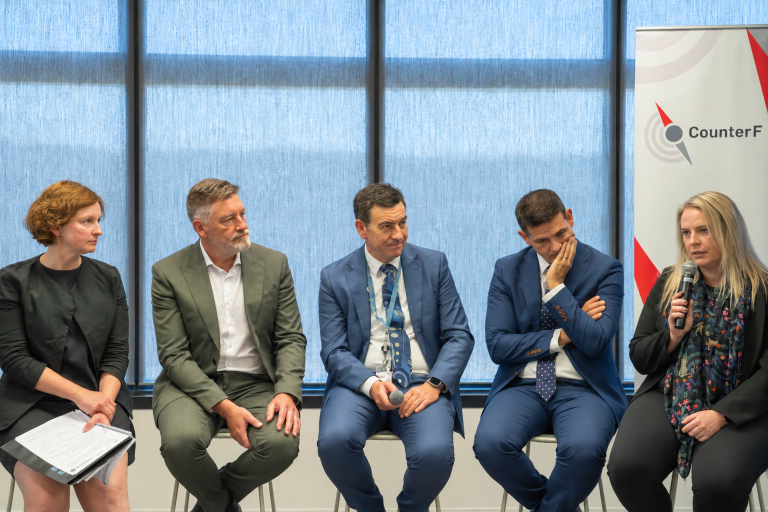
In the opening MasterCraft Series panel event, keynote speaker, Charlotte Davidson, Interim CEO of IDCARE, shared a powerful reminder that fraud can affect anyone. Many people who contact IDCARE never expected to find themselves impacted by fraud. Fraud can result in significant emotional distress, financial hardship, workplace impacts and damage to relationships with effects that can persist long after a fraud event itself.
Facilitated by Sarah Chidgey PSM, Deputy Secretary of the Integrity and Security Group at the Attorney-General’s Department, Senior Executive panellists Nicholas Shizas PSM from the Australian Taxation Office, Sean Worth from the National Indigenous Australians Agency and Peter Timson from Services Australia highlighted how fraud can divert resources away from communities, compromise program outcomes and erode public trust in government services. They emphasised that effective fraud prevention begins with good policy and program design, including early consideration of fraud and corruption risks. By identifying and addressing risks from the outset, agencies can build appropriate safeguards into programs while ensuring services remain accessible to those who need them.
The second event featured Rebecca Shea, Director, and Heather Dunahoo, Assistant Director, from the U.S. Government Accountability Office (GAO), who shared insights from their presentation, Because the Money Wasn't Enough. Through a series of real-world case studies, they demonstrated that the impacts of fraud often extend far beyond financial loss, affecting public safety, national security, access to government services and public trust. Their examples reinforced a key theme of Fraud Awareness Week: fraud can have significant consequences for individuals, communities and government outcomes that are not always immediately visible.
The week’s events concluded with a practical demonstration from the Commonwealth Fraud Prevention Centre of how fraud, integrity and risk professionals can use artificial intelligence tools to strengthen fraud and corruption risk management. Drawing on the Centre’s new Harnessing AI tools for fraud and corruption risk management guidance, presenters showed how AI can help practitioners identify potential fraud and corruption risks more efficiently, enabling earlier and more informed risk mitigation.
Fraud Awareness Week provided an opportunity to reflect on the broader impacts of fraud and the role we all play in protecting against it. Protecting public resources is ultimately about protecting people, services and trust. Whether you work in policy, program, compliance, audit, integrity, risk or fraud control, your decisions contribute to the integrity of the APS. By considering fraud risks in our everyday work, speaking up when something doesn't seem right and promoting a strong culture of integrity, we all have the power to protect public resources, strengthen trust in government and protect what matters.