



Skip to main content Skip to main navigation
Australian Public Service Academy Australian Public Service Academy Australian Public Service Academy Australian Public Service Academy logo

APSLearn logo

APSLearn Login

APS Professions logo
Professions MCP Portal

Main navigation

  • APS Craft

    APS Craft

    • Integrity
    • Working in Government
    • Engagement & Partnership
    • Implementation & Services
    • Strategy, Policy & Evaluation
    • Leadership & Management
  • APS Professions

    APS Professions

    • Complex Project Management Profession
    • Data Profession
    • Digital Profession
    • Evaluation Profession
    • HR Profession
    • Procurement and Contract Management Profession
  • APS People

    APS People

    • Diversity and Inclusion
    • Health and Wellbeing
    • Work Health and Safety
    • Your APS Career
  • APS Induction
  • Learning Experiences

    Learning Experiences

    • Courses
    • Course session dates
    • Microcredentials
    • Events
    • Resources
    • Cross Agency Training Hub
    • Nationwide course sessions
    • SES Executive Coaching
  • Our Services

    Our Services

    • APSLearn
    • APS Academy course offerings
    • APS Academy Training Venues
    • Onboard learning experiences
    • Share and reuse learning experiences
  • Guides

    Guides

    • APS L&D Good Practice Guide
    • Learning Design and Administration
    • Learning Culture
    • The Learner and Career Development
    • Learning Technologies
    • Procurement in L&D
    • Evaluating Learning
    • L&D Search
    • Content Strategy Guide
  • News

    News

    • Academy News
    • MyAcademy
  • About us

    About us

    • About the APS Professions
    • Faculty
    • Learning approach
    • Contact
    • Supplier FAQ's

Reset mindset

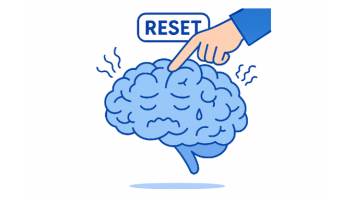
Illustration of a large brain with a finger pressing a button labelled “RESET”. The brain is shown with wavy lines around it, symbolising mental overload, while the reset button represents pausing, resetting, renewing focus or taking a fresh approach.

You are here

  1. Home
  2. Learning Experiences
  3. Resources
  4. Reset mindset
  • Linkedin
  • Twitter
  • Facebook
  • Email
Print
Contents

A reset mindset is a conscious approach to stepping back, recalibrating, and re-engaging with clarity and intention.
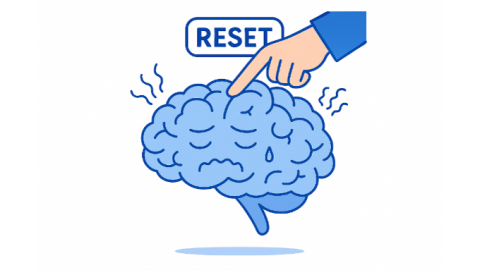
Illustration of a large brain with a finger pressing a button labelled “RESET”. The brain is shown with wavy lines around it, symbolising mental overload, while the reset button represents pausing, resetting, renewing focus or taking a fresh approach.

Key Features

  • Self-awareness and reflection
  • Willingness to pause and reassess 
  • Letting go of unhelpful patterns
  • Refocusing on priorities and goals


Why reset is important for learning

Without reset, people often:

  • stay stuck in unproductive habits
  • repeat mistakes without reflection 
  • experience cognitive overload and fatigue.

With a reset mindset:

  • learning becomes intentional, not accidental
  • mistakes are processed and turned into insights
  • mental clarity improves decision-making and retention. 

Benefits

  • Encourages openness to change: A reset mindset helps individuals let go of past mistakes and approach learning with a fresh, positive perspective. 
  • Supports continuous improvement: It promotes reflection and adaptation, helping people improve skills and knowledge over time. 
  • Reduces fear of failure: Learners become more willing to take risks and try new approaches without being held back by previous setbacks.
  • Strengthens resilience: Embracing a reset mindset helps individuals recover quickly from challenges and stay engaged in learning.

The reset-learn cycle

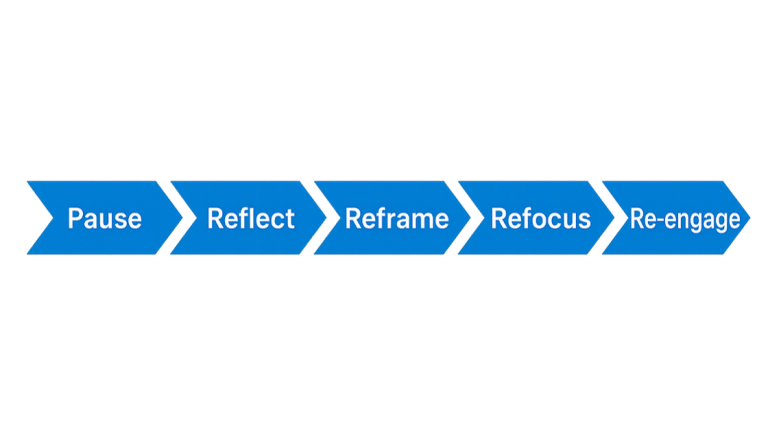
A reset mindset strengthens learning through a simple cycle.

  • Pause – Step back from action 
  • Reflect – Consider what is and isn’t working 
  • Reframe – Shift perspective or assumptions 
  • Refocus – Set clear next steps 
  • Re-engage – Apply learning with intention
<p>The reset-learn cycle A reset mindset strengthens learning through a simple cycle. •	Pause – Step back from action  •	Reflect – Consider what is and isn’t working  •	Reframe – Shift perspective or assumptions  •	Refocus – Set clear next steps  •	Re-engage – Apply learning with intention </p>

Impact on individual learning

A reset mindset enhances:

  • self-awareness and critical thinking
  • the ability to adapt and improve performance 
  • the ability to retain and apply knowledge.

 reset mindset builds: 

  • a growth mindset
  • confidence to try new approaches
  • ownership of development.

Impact on teams and agencies

A reset mindset contributes to a stronger learning culture by: 

  • encouraging open reflection and feedback
  • reducing repeated mistakes
  • supporting continuous improvement
  • helping teams adapt during change.


Barriers to reset

Common challenges include:

  • constant busyness and lack of time
  • pressure to deliver without pausing
  • fear of acknowledging mistakes
  • organisational cultures that prioritise speed over learning.

Practical ways to embed a reset mindset

For individuals:

  • Schedule regular reflection time (daily or weekly).
  • Ask: What did I learn? What will I do differently?
  • Take short mental breaks between tasks to regain focus.
  • Reframe setbacks as learning opportunities. Ask: What is this teaching me?

For teams:

  • Run quick debriefs after key activities.
  • Encourage open, blame-free discussions.
  • Build reflection into workflows.
  • Model reset behaviours at leadership level.

Connection to wellbeing and performance

A reset mindset, in line with the APS Integrated Leadership System, means being aware of your own behaviour and taking responsibility for how it affects others. It also means being open to feedback and different viewpoints to build stronger relationships. A reset mindset supports better delivery and results by helping individuals and teams move away from reacting automatically and instead learn thoughtfully from experiences. It also helps build resilience, adaptability and a habit of continuous improvement.

A reset mindset also helps:

  • reduce stress and cognitive overload 
  • prevent burnout and fatigue
  • improve focus and productivity 
  • sustain long-term performance

Summary

Learning doesn’t happen just by doing more – it is supported by pausing, reflecting and resetting.

A reset mindset turns everyday experiences into meaningful growth and continuous improvement.

Topics
Culture
L&D Categories
Learning Culture
Was this page helpful?
Last updated
30 September 2026

Links & Downloads

Health and wellbeing

Acknowledgement of Country

The APS Academy acknowledges the Traditional Custodians of Country throughout Australia and recognises the continuing connection to lands, waters and communities.
We pay our respect to Aboriginal and Torres Strait Islander cultures and to Elders both past and present.

Museum of Australian Democracy
Old Parliament House 
Parkes 2600

APSLearn terms & conditions

About us

apsacademy@apsc.gov.auContact us
ABN: 99 470 863 260 
  • LinkedIn - external site - external site - external site

Help us improve

We are always looking for ways to improve the user experience of our website

 Share your thoughts

  • © 2021 APS Academy. All rights reserved.
  • FOI
  • Privacy Policy 
  • Terms of use
  • Accessibility
Back to top