

Branding
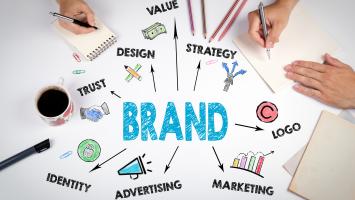
Australian Government departments and agencies are required to comply with the Australian Government Branding Policy, which establishes a consistent and recognisable government identity. The policy promotes clear ownership, credibility and trust by ensuring official offerings, services and communications use approved branding.
Departments and agencies must apply the Australian Government logo and branding requirements unless an exemption or co-branding arrangement has been formally approved.
An organisational brand represents the identity of the agency or organisation delivering the learning. In some cases, organisations may establish learning brands, themes or program identities that group related learning offerings together while remaining aligned to the parent organisation's brand.
In a learning context, branding includes visual identity, tone of voice, design standards, accessibility, and participant experience. This may include a formal registered organisational brand (such as an agency brand) and learning-specific brands or themes (an informal brand) that connect related learning offerings, pathways or initiatives.
Effective branding creates a recognisable and professional learning experience while supporting trust, credibility and engagement.
Why is it important?
Learning is delivered across many agencies, platforms and channels.
Consistent branding helps participants quickly identify trusted learning offerings, recognise connections between related offerings and navigate learning more easily. It reinforces the quality of the learning material, supports professional standards and reduces confusion when participants encounter multiple learning offerings – especially when assets are sourced from various sources.
Branding should align with the Australian Government Branding Policy and agency requirements while providing a clear and accessible participant experience.
What are the benefits?
- Ensures consistency in visual identity, tone, and messaging across all materials, strengthening recognition and trust.
- Reduces rework and risk by aligning content with approved standards from the outset.
- Creates a consistent and familiar learning experience across programs and courses.
- Makes it easier to recognise related learning opportunities, pathways and resources.
- Improves navigation and engagement through a clear and professional design approach.
- Supports accessibility and usability across learning materials.
Suitable for
All staff involved in the design, development, delivery or management of learning offerings and services.
Branding Components to consider when developing learning experiences
- Australian Government and agency style requirements
- Accessibility standards
- Cohesive participant journey across learning offerings
- Reusable templates and layouts
- Visual identity
- Logos and approved branding assets
- Colour palettes
- Typography
- Graphic elements and imagery
- Content and communication
- Plain English language
- Consistent tone and messaging
- Consistent navigation and structure
Organisational Brands, Registered Brands and Learning Brands (or Themes)
Branding can operate at different levels depending on the purpose of the learning product, audience and distribution channel. Consistent branding should not result in identical learning assets. Appropriate variation in imagery, activities, formats and presentation helps maintain engagement while preserving a cohesive learning experience.
Examples may include:
- An agency learning academy that provides all corporate learning
- A leadership development program with a distinct visual identity
- A capability uplift initiative comprising multiple courses, resources and events
- A graduate induction suite or career development pathway presented under a common theme.
Sub-brands should complement, rather than compete with the organisational brand and should be used only when they add value by helping participants identify a suite of related learning offerings.
- Australian Government branding (formal brand): The organisational brand is the formal identity of the agency or organisation delivering the learning. It provides assurance that the learning is official, endorsed and aligned with organisational priorities.
- Registered (formal) or established brand (informal): Some organisations maintain established or registered brands for specific services, programs or offerings. These brands have an identity that is recognised by participants and stakeholders while remaining connected to the parent organisation. Examples may include a learning academy, capability framework, leadership program or learning platform.
- Learning brands or themes (informal): Learning brands or themes are less formal identifiers used to connect related learning offerings, campaigns or capability initiatives. They help participants recognise that individual courses, resources, events and communications form part of the same learning journey. Unlike organisational or registered brands, they generally do not operate as standalone brands. Examples may include themes for leadership development, induction suite, graduate programs or priority capability initiatives.
Determining how learning should be branded
The branding approach should be proportionate to the purpose of the learning. Consider whether the branding elements help improve recognition, navigation and participant engagement without creating confusion or competing with the top layer identity.
| Branding level | Primary purpose | Typical audience | Used when |
|---|---|---|---|
| Organisational brand | Establish ownership, authority and endorsement | Internal and external audiences |
|
| Registered or established brand | Build recognition for a formal program, service or learning offering | Existing and prospective participants |
|
| Learning theme or informal brand | Connect related learning products and participant experiences | Learners participating in a specific initiative or pathway |
|
General Practices
|
Good Practice |
|---|
|
|
Practices to avoid |
|---|
|
Hypothetical user experiences
|
Example |
|---|
|
An agency launches a new leadership capability program comprising workshops, online learning, resources and mentoring activities. Each component is developed by different teams and uses different colours, templates and naming conventions. Potential issue Participants do not recognise that the learning products belong to the same program and struggle to identify recommended next steps. The inconsistent branding reduces confidence in the program and creates confusion about whether the learning is agency-endorsed. Better approach A consistent organisational brand is applied across all learning products, supported by a common leadership program theme and visual identity. Participants can easily identify related learning opportunities, navigate the learning pathway and recognise the program as an endorsed agency initiative. |