

Audio
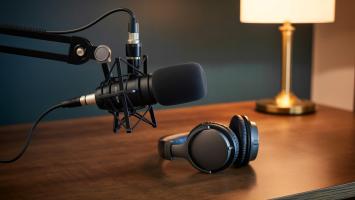
Audio is a learning approach that uses spoken words, storytelling and sound to engage learners through hearing.
Audio can be delivered as narration, interviews, discussions, podcasts, voice recordings or presentations. It may be used on its own or combined with visuals, such as videos, animations, presentations or eLearning modules, to support understanding and engagement.
Why is it important?
Some people learn more effectively by listening to information and reflecting on what they hear.
Audio can help make learning more engaging, memorable and accessible. When combined with visuals, it can reinforce key messages and support understanding of complex concepts. As a standalone format, such as a podcast, audio provides flexibility for learners who want to access content while commuting, travelling or working remotely.
Audio also supports user-centred learning by offering an additional way to engage with content and accommodate different learning preferences. When supported by captions and transcripts, audio can contribute to more accessible and inclusive learning experiences.
What are the benefits?
- Supports learners who prefer listening as part of their learning experience.
- Provides flexibility by allowing learning to occur while travelling, commuting or working remotely.
- Can simplify complex topics through conversation, storytelling and expert insights.
- Helps create engaging and memorable learning experiences.
- Can be combined with visual content to reinforce key messages and improve understanding.
- Is scalable and can be distributed easily across large and geographically dispersed workforces.
Suitable for
- APS 1 to EL 2 learners.
- Large, geographically dispersed cohorts.
- Learners new to a topic, process, policy or system.
- Knowledge sharing through interviews, stories and expert discussions.
- Reinforcing key concepts within videos, presentations and other learning resources.
General Practices
|
Good Practice |
|---|
|
|
Practices to avoid |
|---|
|
Hypothetical examples
|
Example |
|---|
|
An APS learning team is developing a learning experience for staff working across multiple locations. The team uses short audio segments within videos to explain key concepts and also creates a podcast-style discussion featuring subject matter experts. Staff can engage with the content during learning activities or listen while commuting or working remotely. Potential issue Audio is added late in the design process without considering the learner experience. Narration may not align with visual content, key messages may be unclear, or audio may be the only way important information is communicated.
Better approach Audio is planned as part of the learning design from the beginning. The team determines whether audio will be used as a standalone resource, such as a podcast, or paired with visual content to reinforce learning.
When designed well, audio creates a flexible and accessible learning experience. It can help explain complex concepts, reinforce key messages and support learners to engage with content in a way that suits their needs and work environment |